
Chimney Repairs London
The Repair That Makes Things Worse Instead of Better
A chimney repointed with the wrong mortar can look perfectly fine for a year or two, then start failing faster than before it was touched. Victorian and Edwardian chimneys were built with lime mortar — softer and more porous than modern mixes, deliberately so, because it lets moisture evaporate back out of the brick rather than sealing it in.
Repoint that same chimney with standard cement mortar, and the cement — harder and less permeable than the brick around it — traps moisture inside instead. That trapped moisture freezes in winter, expands, and spalls the brick face from the inside out, which is exactly the kind of damage that takes years to show up and costs far more to fix than the original repointing job ever did.
I'm John Quilligan, and this is the single most common mistake we see other repairs leave behind on period chimneys across South London and Surrey — a repair that looked right on the day, and quietly caused new damage for years afterward.
We match mortar to the property, not just to whatever's easiest to mix.
A Note on Listed Buildings and Conservation Areas
Most roof repairs don't need planning permission. However, if your property is a listed building or sits within a conservation area, permission may be required even for repair work, particularly if the repair changes the roof's appearance or materials.
If you're unsure whether this applies to your property, ask us during the free inspection — we'll flag it rather than start work and leave you to find out later.


What Customers Say About Us
Real reviews. Real workmanship. Real results.




Get A Quote
What We Actually Fix
Repointing — renewing failed or crumbling mortar joints in the stack, using lime mortar on period properties and matching the existing mix as closely as possible rather than defaulting to modern cement.
Flaunching repair — the mortar cap around the base of your chimney pots is called flaunching, and it's one of the most common, least understood failure points on a chimney. Once it cracks or breaks down, water soaks straight into the top of the stack, often for months before it shows up as a leak anywhere visible.
Chimney pot replacement and repair — cracked, leaning, or missing pots, refitted or replaced and properly bedded in.
Leadwork and flashing repairs — the lead sealing the joint between the chimney and the surrounding roof degrades over time and is a very common source of leaks that get blamed on the chimney itself.
Partial and full stack rebuilds — where damage goes beyond repointing, we rebuild the affected section of the stack to match the original as closely as possible.
Capping for redundant flues — where a chimney's no longer in use, a proper cap keeps rain, birds, and debris out while still allowing the flue to ventilate correctly, rather than sealing it completely.
How We Handle a Chimney Job
Signs Your Chimney Actually Needs Attention
Crumbling mortar or visible gaps between bricks — the clearest sign repointing is overdue, and the sooner it's addressed, the smaller and cheaper the job stays.
Damp patches on a ceiling or wall near the chimney breast — very often flashing or flaunching failure, not the chimney structure itself.
Debris or small pieces of mortar collecting at the base — a sign the pointing above is breaking down and falling away.
A chimney that looks like it's leaning — worth taking seriously and getting inspected properly rather than waiting, since chimney movement can indicate a genuine structural issue.
Staining, discolouration, or flaking brick faces — often frost damage from trapped moisture, exactly the kind of damage caused by the wrong mortar mix in a previous repair.
Two Chimneys, Two Very Different Jobs
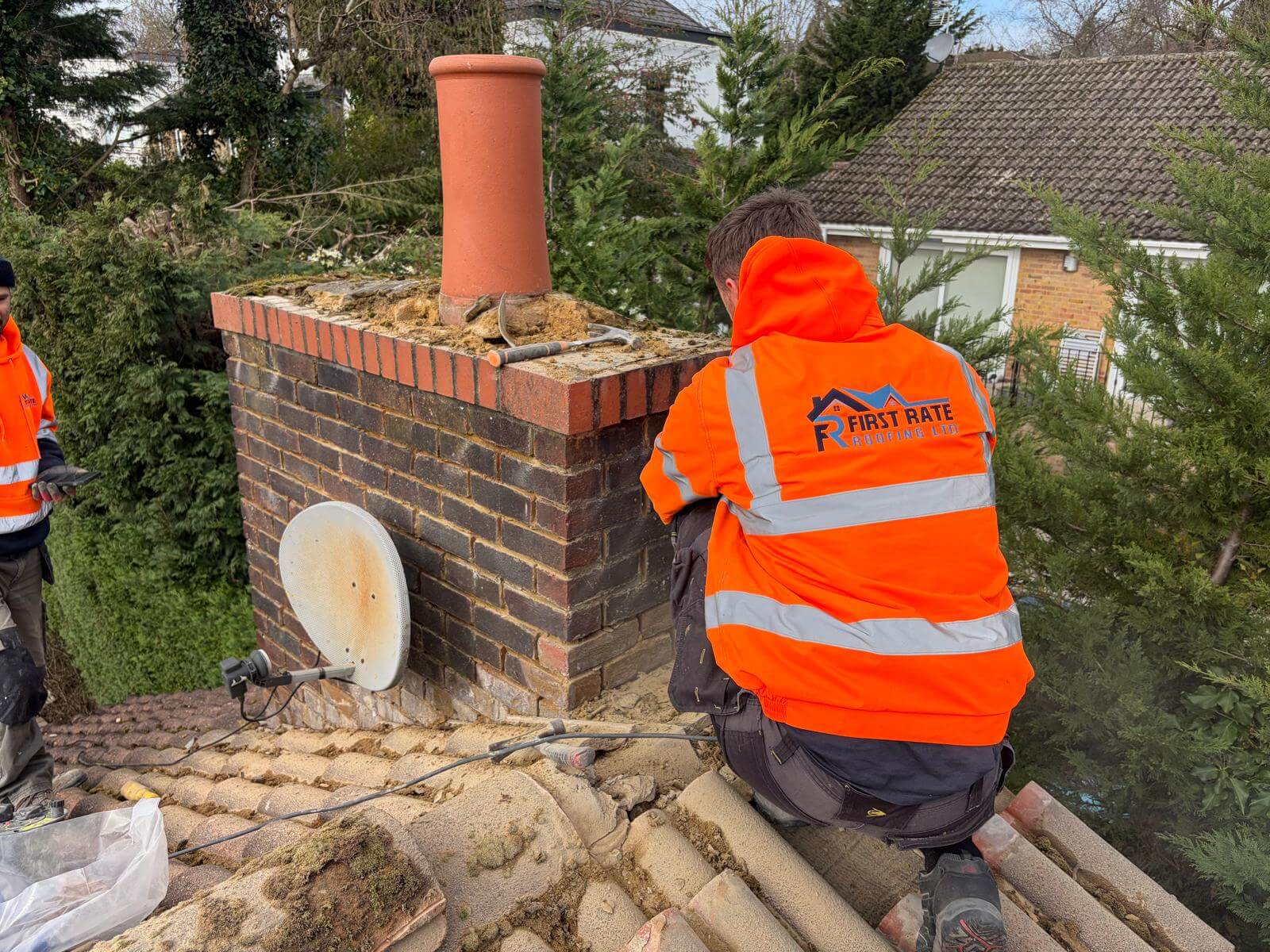
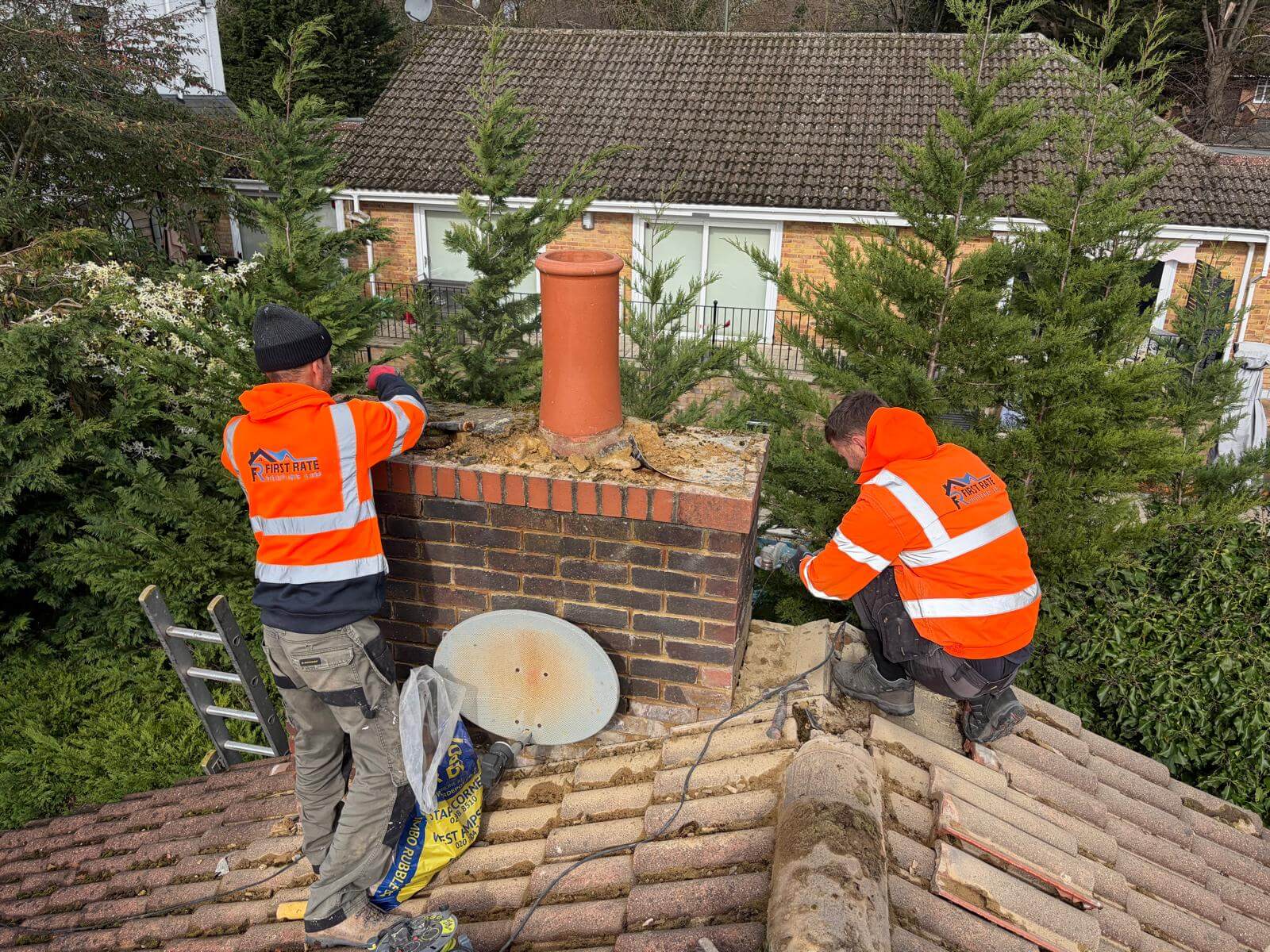
Not every chimney job looks like the last one. The first pair of photos shows a straightforward single-flue chimney on what looks like a bungalow or single-storey extension — flaunching removed and redone around the pot, satellite dish still mounted to the stack, both members of the team working it together off a straight roof ladder. A contained job: get the mortar cap right, reseal around the pot, done.
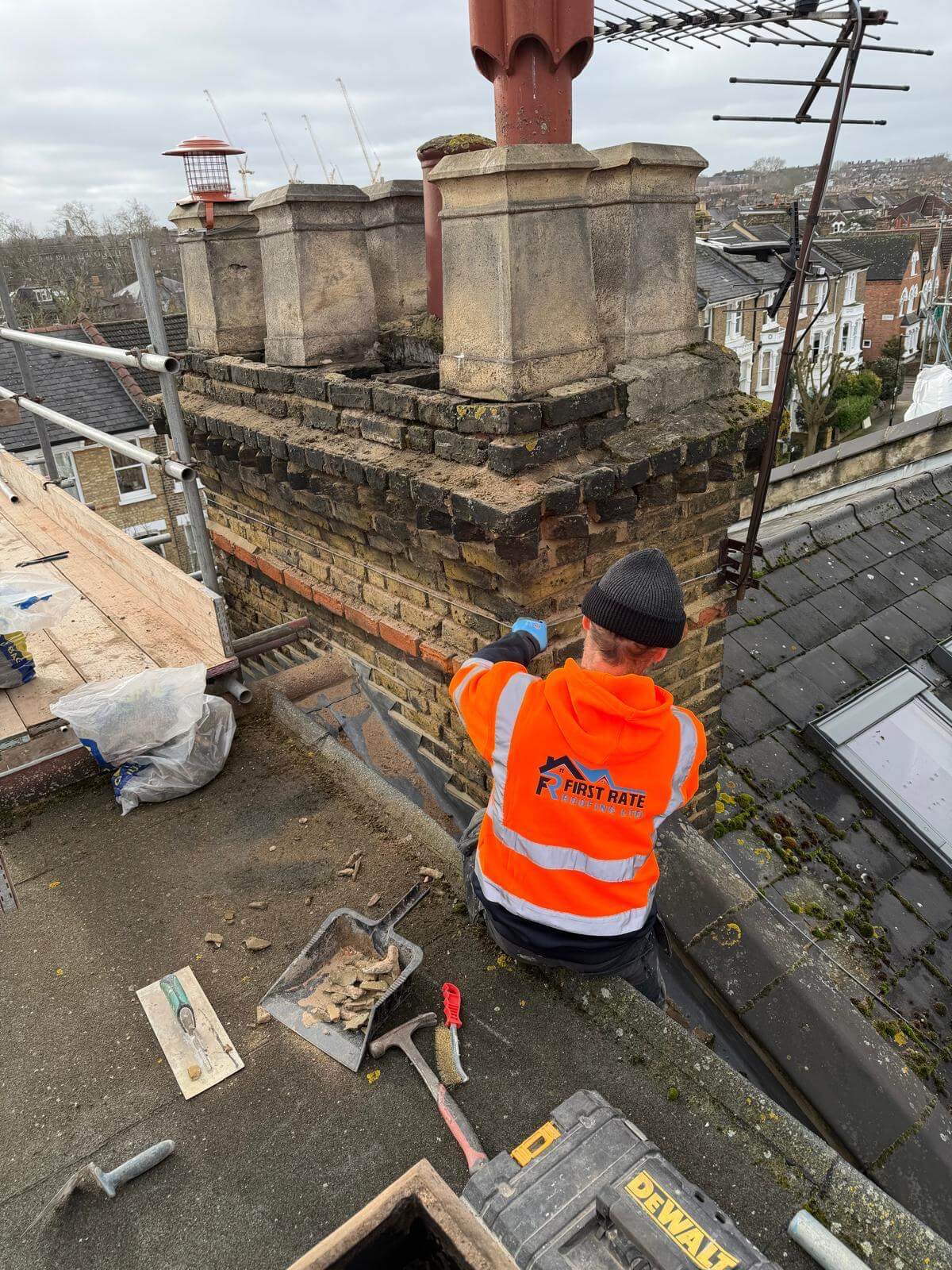
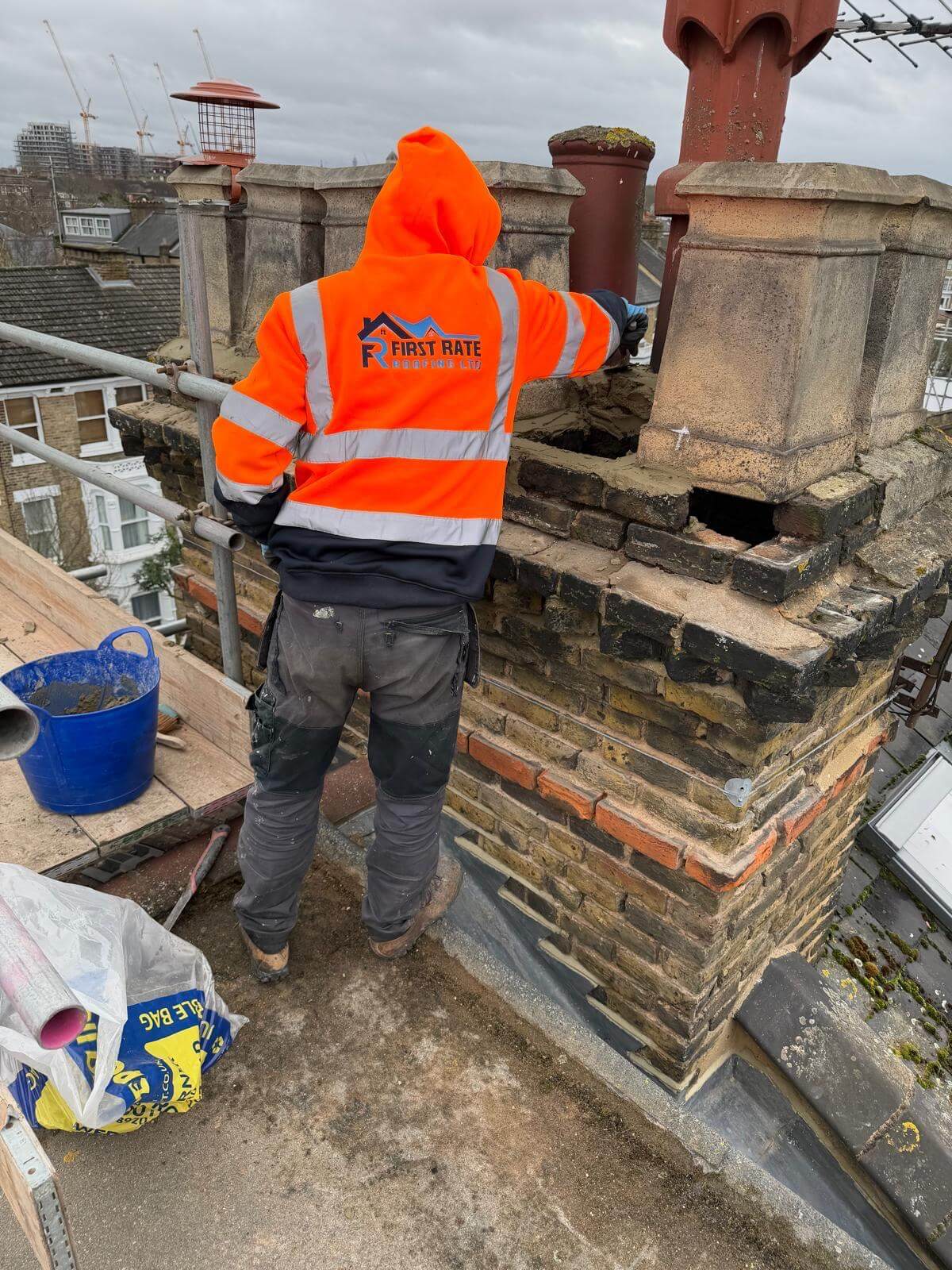
The second pair is a different order of work entirely — a genuine period Victorian or Edwardian stack with multiple square pots on individual raised plinths, the kind you see running along a whole terrace roofline in inner London.
Here the old mortar's being raked right out from between courses of brick, working from proper scaffolding rather than a ladder, with the flue liners and pots needing careful handling around each one individually. This is exactly the multi-flue, ornate stack that costs more to repoint than a single-pot chimney — not because the work itself is harder per brick, but because there's simply more chimney, more joints, and more access needed to reach all of it safely.
That's the honest answer to "why did my neighbour's repointing cost half of mine" — it's very often not about who charged what, it's about whether there's one flue or four.
Chimney Repairs FAQ's
Why does my chimney need lime mortar instead of standard cement? Period brick chimneys were built to work with lime mortar's flexibility and permeability — it lets moisture evaporate out rather than trapping it inside. Modern cement mortar is harder and less porous, and using it on older brickwork traps moisture that then freezes and damages the brick from within. This is one of the most common mistakes we see left behind by other repairs.
What is flaunching, and why does it matter? Flaunching is the mortar cap around the base of your chimney pots. It's a common, often-missed failure point — once it cracks, water soaks directly into the top of the stack, sometimes for a long time before it's noticed anywhere else.
How do I know if my chimney needs repointing or a full rebuild? If the damage is limited to the mortar joints and the brickwork underneath is structurally sound, repointing is usually the right call. If bricks themselves are spalled, cracked, or the stack shows signs of leaning or movement, a partial or full rebuild may be needed. We'll give you a straight answer during the free inspection.
Is a damp patch near my chimney breast definitely a chimney problem? Not necessarily — flashing or flaunching failure is a very common cause of damp that gets blamed on the chimney structure itself. We check the whole junction, not just the obvious suspect.
Do you cap chimneys that are no longer in use? Yes — a proper cap on a redundant flue keeps rain, birds, and debris out while still allowing correct ventilation, rather than sealing it completely, which can cause its own problems.
Do you charge for the inspection? No. No call-out fee, ever, regardless of what the inspection finds.
Any Questions?
Ask Us
What Chimney Repairs Actually Cost In London
Repointing typically runs £500-£1,500 for a standard stack, rising toward £2,000+ on larger, ornate, or multi-flue Victorian and Edwardian stacks — common across South London's period terraces, which often have two or more stacks needing attention at once.
Flaunching repair typically runs £150-£500 for the work itself, though once scaffolding is factored in on a two-storey property, all-in costs commonly reach £500-£800.
Chimney pot replacement typically runs £150-£400 per pot, including refitting and bedding in.
Leadwork and flashing repairs typically run £400-£1,500, depending on the extent of the flashing affected and whether scaffolding is required.
Partial rebuilds — replacing the top few courses of brickwork and re-setting the flaunching and pots — typically run £600-£1,500.
Full stack rebuilds above the roofline typically run £1,500-£5,000, and can climb toward £10,000 on larger, more complex, or hard-to-access stacks. As a rough rule of thumb, if repairs are approaching roughly half the cost of a full rebuild, a rebuild is often the more sensible long-term spend rather than paying repeatedly to patch a structure that's fundamentally failing.
Scaffolding is very often the single largest line on a chimney repair bill — typically £400-£1,200 depending on height and access — which is exactly why it's worth combining every piece of chimney work into one visit rather than paying to scaffold the same stack twice within a few years.
Additional Roofing Services in London
A repair isn't always the only thing on a roof that needs attention — guttering, flashing, and chimneys often fail around the same time as the main covering, since they're all exposed to the same weather and age at a similar rate. Below are the other services our team carries out across London.


Get a Free Inspection On Your Chimney
Matched mortar, honest diagnosis, and a guarantee that's actually in writing.
Call or WhatsApp 07455 632326 for same-day response across South London, South West London, and Surrey.