Fascia & Soffit Replacements London
Fascia and Soffit Aren't the Same Job
Most homeowners lump fascia and soffit together as "roofline trim," but they do genuinely different jobs.
The fascia is the board fixed to the edge of the roof — it's what your guttering actually bolts onto, and it takes real structural load.
The soffit sits underneath it, and its main job isn't cosmetic — it ventilates the roof space, letting air move through the loft to stop condensation building up and rotting the timbers from the inside.
Get either one wrong, and the consequences are different.
A failed fascia means guttering pulling away from the roofline. A failed or blocked soffit means damp air trapped in your loft with nowhere to go, which causes exactly the kind of slow timber decay that's invisible until it's a much bigger problem.
London Roofing Accreditations
We're proud to be associated with the following organisations.
Established in 1985, the Confederation of Roofing Contractors (CORC) is the premier roofing trade association in the UK. CORC members are held to strict standards of workmanship, and are widely considered among the best roofing contractors in the business.
As members of CORC, we offer our customers 10-20 year insurance-backed guarantees and deposit protection on top of our own 25-year guarantee on new roofs — giving you real peace of mind, backed by more than just our word.
We're also verified members of TrustATrader rated 4.99 out of 5 from real customer reviews.


What Customers Say About Us
Real reviews. Real workmanship. Real results.




Get A Quote
Choosing the Right Material
uPVC — low-maintenance, weather-resistant, and available in a wide range of colours including woodgrain finishes. The most common and cost-effective choice for most South London and Surrey properties.
Timber — the traditional choice, especially where a period property's character depends on it, though it needs ongoing maintenance and repainting that uPVC doesn't.
Aluminium — a slimmer, more contemporary profile suited to modern properties, more durable than uPVC but at a higher price point.
Mock Tudor-specific composite boards — for the black-and-white timber-framed gable style common on 1930s South London and Surrey semis, modern polyurethane and composite boards can recreate the original crisp look without the ongoing repainting and rot risk of the real timber they replace.
How We Handle a Fascia & Soffit Job
Why Ventilation Matters More Than It Looks Like It Should
Modern building standards require proper roof ventilation for a reason — trapped, humid air in a loft space condenses on cold surfaces, and that moisture is what causes timber rot and mould over time, not the weather outside.
Soffits with built-in ventilation slots or continuous venting are what let that air actually move.
An old, blocked, or poorly fitted soffit can look completely fine from the ground while quietly starving your roof space of the airflow it needs.
This is one of those problems that doesn't announce itself with a leak or a visible failure — it shows up years later as rot in rafters that should have lasted decades.
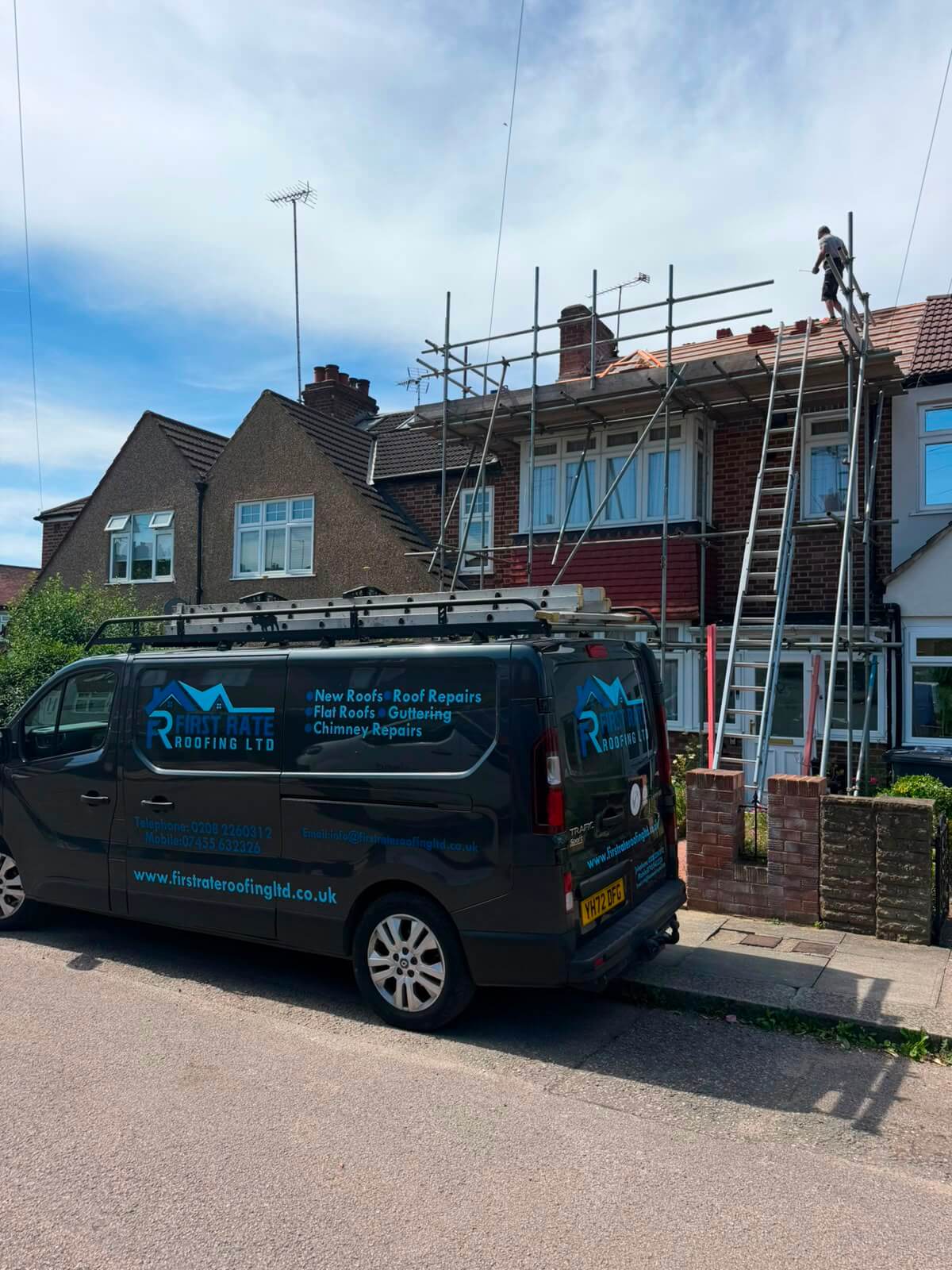
Getting the Period Detail Right, Not Just the Function
Not every roofline job is a straight run of standard fascia.
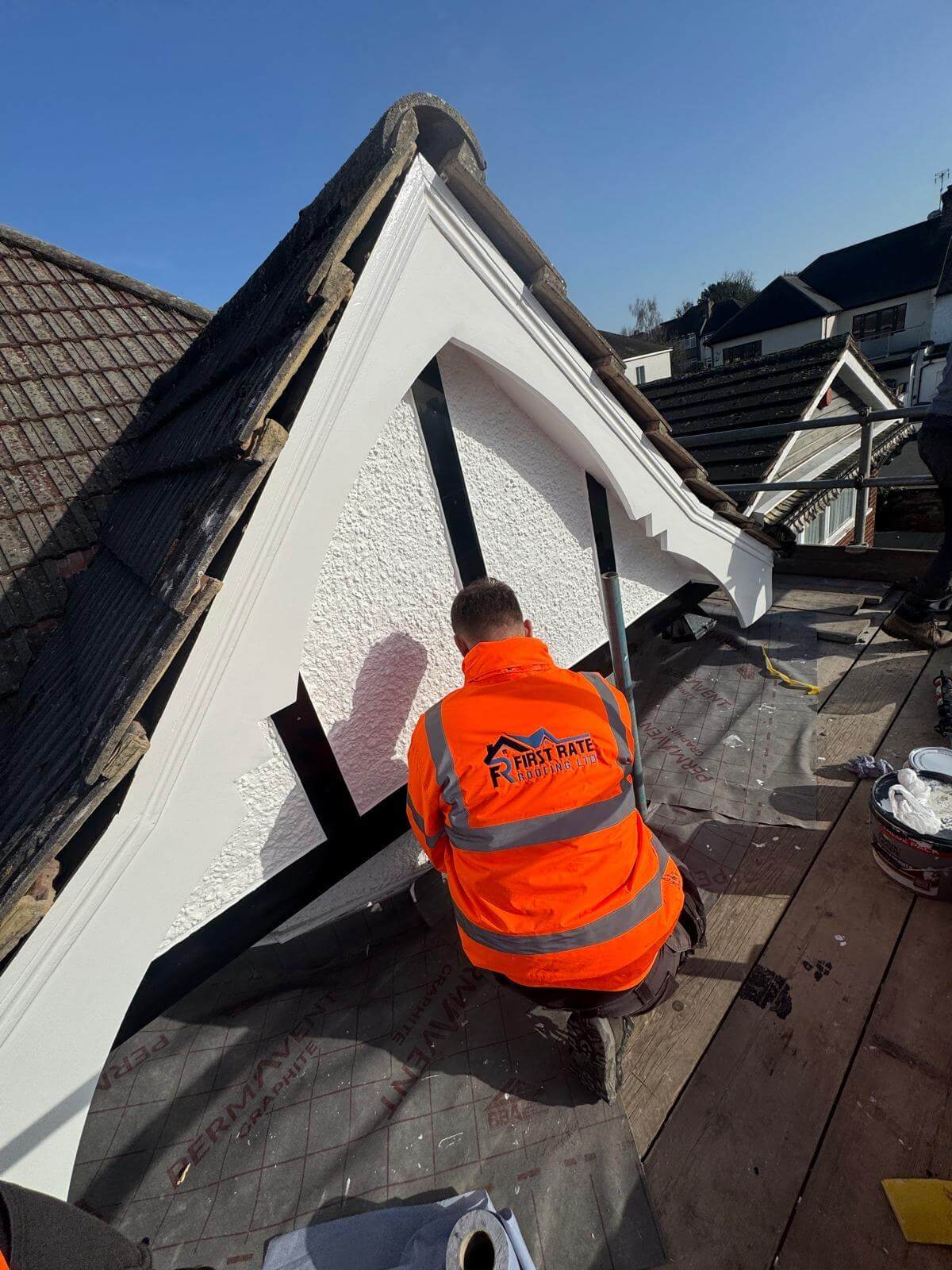
This is a decorative gable-end verge board — the ornamental trim along a gable's sloped edge, complete with scrollwork and a shaped corbel detail — being carefully fitted and finished on a period property mid-re-roof.
Work like this takes more care than a standard fascia replacement.
The shaping has to match the original profile, the joints have to sit cleanly against genuinely awkward angles at the ridge, and it's being finished by hand rather than clipped into place like a straight run of uPVC board.
It's the kind of detail that's easy to get wrong and very visible to a neighbour's eye if it is — which is exactly why it's worth doing properly the first time.
Roofline Replacement FAQ's
What's the actual difference between fascia and soffit? The fascia is the board along the roof edge that your guttering is fixed to. The soffit sits underneath it and ventilates the roof space, helping prevent condensation and timber decay in the loft. They're often replaced together but do genuinely different jobs.
Why does my guttering keep sagging even after I've had it repaired? This is often a fascia problem, not a guttering problem — if the board the guttering is fixed to has rotted, there's nothing solid underneath for the brackets to hold onto, however good the gutter repair itself is.
Should I choose uPVC or timber? uPVC is lower-maintenance and more cost-effective for most properties. Timber suits period properties where matching original character matters, but needs ongoing repainting. For Mock Tudor-style properties specifically, modern composite boards can recreate the traditional look without the maintenance.
Do I need planning permission to replace my fascia and soffits? Usually not — it's classed as permitted development. Listed buildings and conservation areas are the main exception, and we'll flag this during your inspection if it applies.
Should I replace my guttering at the same time as my fascia? Often yes — since gutters are fixed to the fascia, doing both together uses the same access and scaffolding, which is usually more efficient than two separate jobs later.
How long does a fascia and soffit replacement take? Most standard residential jobs take 1-2 days; larger or full roofline replacements can take 3-5 days.
Any Questions?
Ask Us
Signs Your Roofline Needs Attention
Sagging or pulling-away guttering — usually a fascia problem, since the fascia is what the guttering brackets are actually fixed to. If the board underneath has rotted, the guttering has nothing solid to hold onto.
Visible rot, cracking, or warping — timber fascia and soffit rot with age and moisture exposure; older uPVC can crack, discolour, and warp after decades of sun exposure.
Peeling paint on timber fascia — the protective coating failing is an early sign of moisture getting into the timber underneath, worth addressing before it becomes structural rot.
Water staining on the wall below the roofline — often means water's getting behind the fascia rather than draining through the guttering as intended.
Birds or pests entering the roof space — gaps in damaged soffit boards are a common, overlooked entry point.
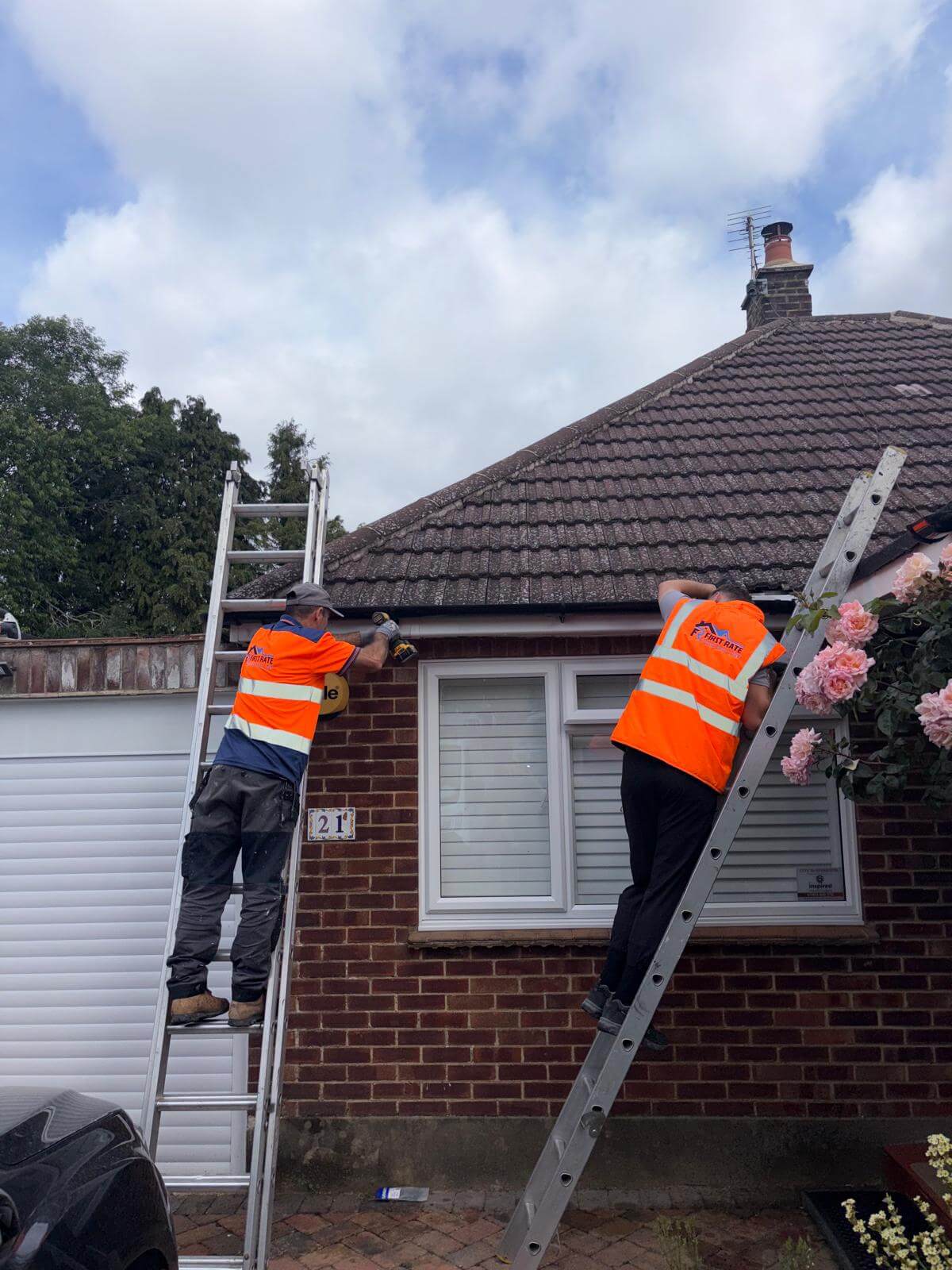
Additional Roofing Services in London
A repair isn't always the only thing on a roof that needs attention — guttering, flashing, and chimneys often fail around the same time as the main covering, since they're all exposed to the same weather and age at a similar rate. Below are the other services our team carries out across London.


Get a Free Inspection On Your Roofline
We check fascia, soffit, and guttering together — because a problem in one is very often the real cause of a problem in another.
Call or WhatsApp 07455 632326 for same-day response across South London, South West London, and Surrey.