
Roof Repair Costs in South London: What You’ll Actually Pay
Real per-material pricing, adjusted for what South London labour and access actually cost — not a national average that doesn’t apply here.
Most roof repair cost guides quote a national UK average and leave you to guess how much higher South London actually runs. That gap matters — labour rates, scaffolding costs, and access restrictions on narrow terraced streets in Tooting or Balham are genuinely different from a detached house in the Midlands, and a national figure quietly understates what you’ll actually pay here.
This guide by us, First Rate Roofing breaks down real, current pricing specifically adjusted for South London, South West London, and Surrey — where the numbers come from, what actually moves them, and the extras that catch people out on a quote that looked cheap at first glance.
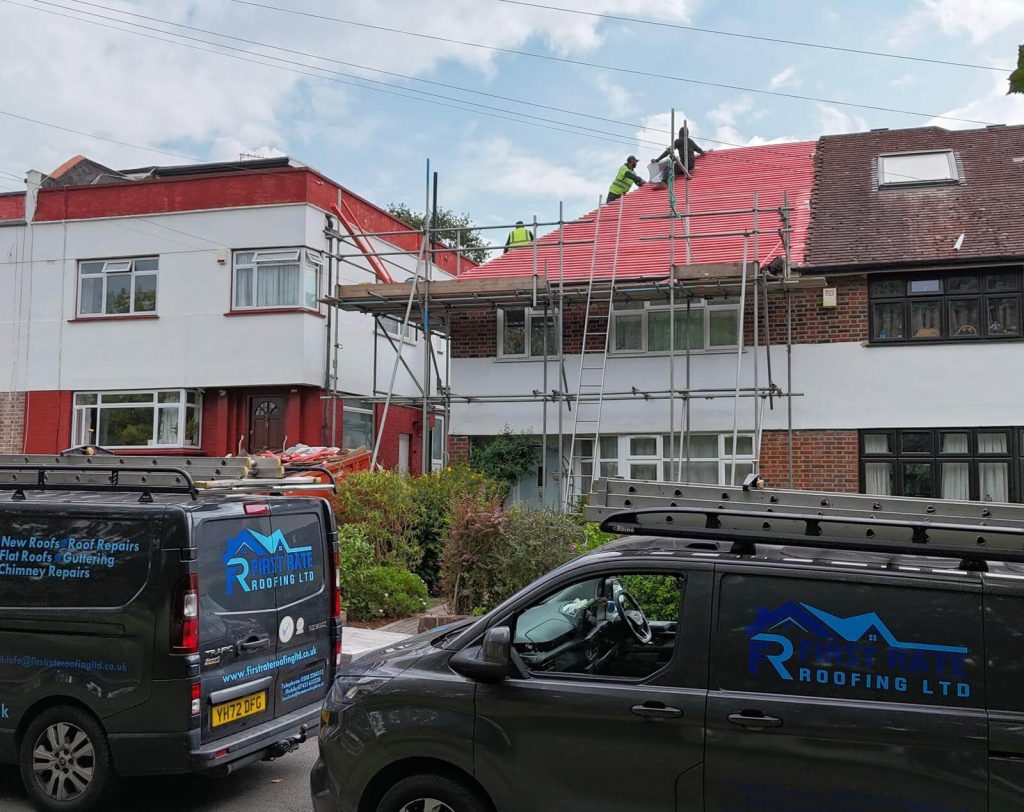
What Roof Repairs Actually Cost, By Material
National baseline data (Checkatrade, 2026) shows repair costs varying significantly by roofing material. London and the South East typically run 15-25% above these national figures, driven by higher labour rates and more restricted access on period terraces and narrow residential streets. Adjusted for that premium, here’s what South London homeowners should realistically expect:
| Material | National Average (per m²) | South London Adjusted (per m²) |
|---|---|---|
| Concrete tile | £90-120 | £103-150 |
| Clay tile | £110-160 | £126-200 |
| Natural slate | £150-220 | £172-275 |
| Bitumen felt (flat roof) | £100-140 | £115-175 |
| EPDM rubber (flat roof) | £120-170 | £138-212 |
| GRP fibreglass (flat roof) | £130-180 | £150-225 |
These are per-square-metre rates for the repair itself — for context, most individual repair jobs (a handful of slipped tiles, a section of flashing) cover well under 3m², which is why a typical minor repair on a South London property usually lands in the £150-£400 range as a total job cost, not a per-metre figure multiplied out across the whole roof.
Common Repairs and What They Typically Cost
Ridge tile repairs — typically £50-70 per metre nationally; expect the higher end or above in South London given scaffolding and access requirements on most period terraces.
Lead flashing repairs — typically £50-70 per metre for straight runs, rising to £80-120 per metre for stepped flashing around chimneys — a common job on Victorian and Edwardian stacks across this patch.
Roof valley repairs — typically £30-40 per metre for GRP valley work, though lead valley repairs on older properties often cost more given the skilled labour involved.
Rooflight or skylight replacement — typically starts from £1,000, though this varies considerably depending on whether it’s a like-for-like swap or a full new installation.
Chimney flaunching and cowling repairs — typically £85-145 per m², consistent with the flaunching-specific pricing on our own [Chimney Repairs] page.
What Actually Moves the Price Beyond the Base Rate
Access and scaffolding. This is the single biggest swing factor on almost every job. Scaffolding alone typically runs £600-1,200 depending on height and access, and on narrow South London streets with limited setup space, it’s often at the higher end of that range or requires additional permissions that add time before work even starts.
Roof pitch and complexity. A straightforward gable roof is quicker and cheaper to work on than a hipped roof with dormers, valleys, and multiple chimneys — common on the larger Edwardian and 1930s properties across Sutton, Epsom, and Surrey.
Property age and originality. Pre-war properties frequently have discontinued tile profiles. Matching old tiles is often the hardest part of a repair, and a roofer who genuinely knows South London’s housing stock will know where to source a proper match rather than fitting something that looks visibly wrong against the original roof.
Urgency. Emergency call-outs after storm damage typically carry a premium across the industry — though this is exactly the kind of extra cost worth checking for upfront, since it isn’t universal.
The Extras That Turn a Cheap Quote Into an Expensive One
A quote that looks significantly lower than everyone else’s is very often missing something, not genuinely better value. The most common gaps:
Call-out fees. Some roofers charge £50-150 just to attend and assess a job, before any work is agreed. We don’t — no call-out fee, ever, on any visit.
Scaffolding quoted separately, or not at all. If a quote doesn’t mention scaffolding and your job clearly needs it, that cost is coming later, not disappearing.
VAT excluded from the headline figure. Most repair quotes are subject to standard 20% VAT. If a number looks unusually competitive, check whether VAT is already included or about to be added on top.
Waste removal. Removing old, damaged roofing material has to go somewhere. If it’s not mentioned in the quote, ask directly rather than assume it’s covered.
We give a written quote with all of this included upfront — what we quote is what you pay, not a number that grows once work has started.
When a Repair Stops Being the Right Answer
Not every roof problem should be repaired indefinitely. As a rough guide, if damage covers more than roughly 30% of the roof, if there’s daylight visible through the boards from inside the loft, or if a roof has already had three or more repairs to the same area, a full replacement is often the more sensible long-term spend rather than paying repair prices repeatedly for a problem repairs can no longer fix. See our Roof Replacement page for the full breakdown on that side of the decision, including real, London-adjusted replacement pricing by material.
Frequently Asked Questions
Why is South London roofing more expensive than the national average I’ve seen online? Labour rates run higher across London and the South East generally, and access on narrow period terraces — common across Tooting, Balham, and Streatham — often requires scaffolding or careful setup that a detached suburban property elsewhere in the country wouldn’t need. Most national cost guides don’t reflect this gap.
Do I need planning permission for a roof repair? Most repairs fall under permitted development and don’t need planning permission, provided the work doesn’t significantly alter the roof’s appearance. Listed buildings and conservation areas are the main exception — worth flagging during your inspection if it applies to your property.
Is a roof leak covered by my home insurance? Sudden damage from a storm is often covered by buildings insurance. Gradual wear and tear generally isn’t. Always check your specific policy and document any damage with photos before making a claim.
How do I know if a quote is missing something? Ask directly whether scaffolding, VAT, and waste removal are included. A written, itemised quote should specify all of this clearly — if it doesn’t, ask before agreeing to anything.
How quickly can repairs actually be carried out? Minor repairs are often completed within a day; larger or more complex repairs involving scaffolding can take several days depending on scope and weather. We’ll give you a realistic timeline during the free inspection, not an optimistic one designed to get you to book.
Get an Honest, Written Quote
Free inspection, no call-out fee, and a written quote with scaffolding, VAT, and everything else included upfront — not added on once you’ve already agreed to the job.
Call or WhatsApp 07455 632326 for same-day response across South London, South West London, and Surrey.