
Chimney Restoration & Repairs in Fulham
Fulham Neighborhoods & Architectural Stack Profiles
The Peterborough Estate & Lion Houses (SW6): Renowned late Victorian and Edwardian red-brick terraces crowned by terracotta lions. Imposing multi-flue stacks feature decorative corbelled brickwork and deep clay pots. High wind exposure across broad rooflines leads to weathered mortar beds and cracked top crowns.
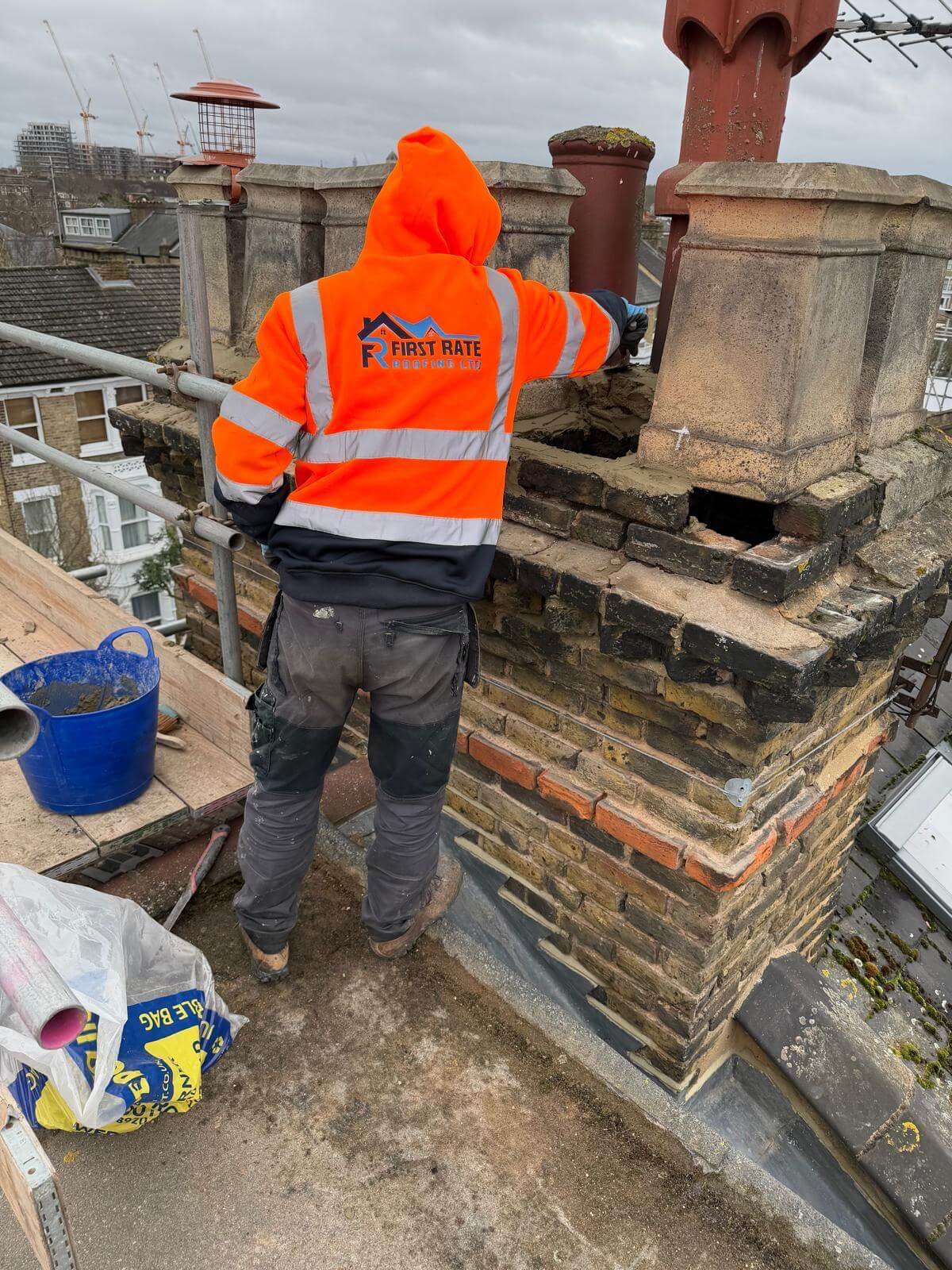
Parsons Green & New King’s Road (SW6): Substantial Victorian villas and tree-lined period avenues. Shared party-wall stacks constructed with yellow London stocks frequently suffer from eroded lime joints, slipped lead step flashings along steep slate pitches, and internal flue damp.
Bishops Park & River Thames Fringe (SW6): Period family properties and cottages running along Stevenage Road and Bishop’s Avenue. Direct exposure to moist river winds accelerates pointing erosion and promotes dense moss growth around chimney flashing junctions.
Sands End & Wandsworth Bridge Road Terraces (SW6): High-density Victorian artisan worker terraces. Compact party-wall chimneys frequently exhibit frost-spalled brick faces, dislodged cowls, and internal flue condensation from sealed fireplaces.
We're 5 Star Rated In Your Area
Real reviews. Real workmanship. Real results.


Free Quotes
Local Chimney Issues Unique to SW6 Properties
Eroded Red-Brick Joints & Gable Strain on Peterborough Estate Lion Houses
The famous "Lion Houses" across the Peterborough Estate were built using soft red facing bricks bedded in lime mortar. Over a century of driving rain washes out the exterior joints, leaving brick courses unsupported. A destructive mistake common across SW6 is historic repointing done with hard Portland cement. Because modern cement is rigid and impermeable, moisture cannot escape through the joints. During freezing weather, trapped water expands, shattering the faces of the soft red bricks (spalling). We rake out failed cement and repoint using custom NHL 2 or NHL 3.5 hydraulic lime mortar, restoring breathability and structural flex.
Thames Valley River Fog & Salt Efflorescence near Bishops Park
Properties located near Bishops Park and the Fulham Palace river bend absorb persistent humidity and winter river fog rolling off the Thames. When chimneys have been repaired with non-breathable sealants, moisture remains trapped within the masonry core. As the brickwork dries, soluble salts are drawn to the surface, forming powdery white deposits (efflorescence) that break down the brick matrix. We remove degraded surface salts, replace spalled bricks with matched reclaimed London stocks, and repoint with breathable lime mortar.
Soot Leaching & Unvented Flue Condensation in Sands End Conversions
Across Sands End and the roads off Wandsworth Bridge Road, original coal fireplaces were routinely sealed up as ground-floor layouts were opened up into modern living spaces. When a disused flue is capped solid without proper top ventilation, warm, humid household air rises into the cold chimney shaft and condenses against cold exterior bricks. This condensation dissolves historic soot deposits inside the flue, creating acidic, tar-stained damp patches that bleed through painted interior chimney breasts. We resolve this by fitting breathable terracotta pepperpot cowls or C-Caps that maintain steady airflow while sealing out rain.
Complete Chimney Repair Services in Fulham
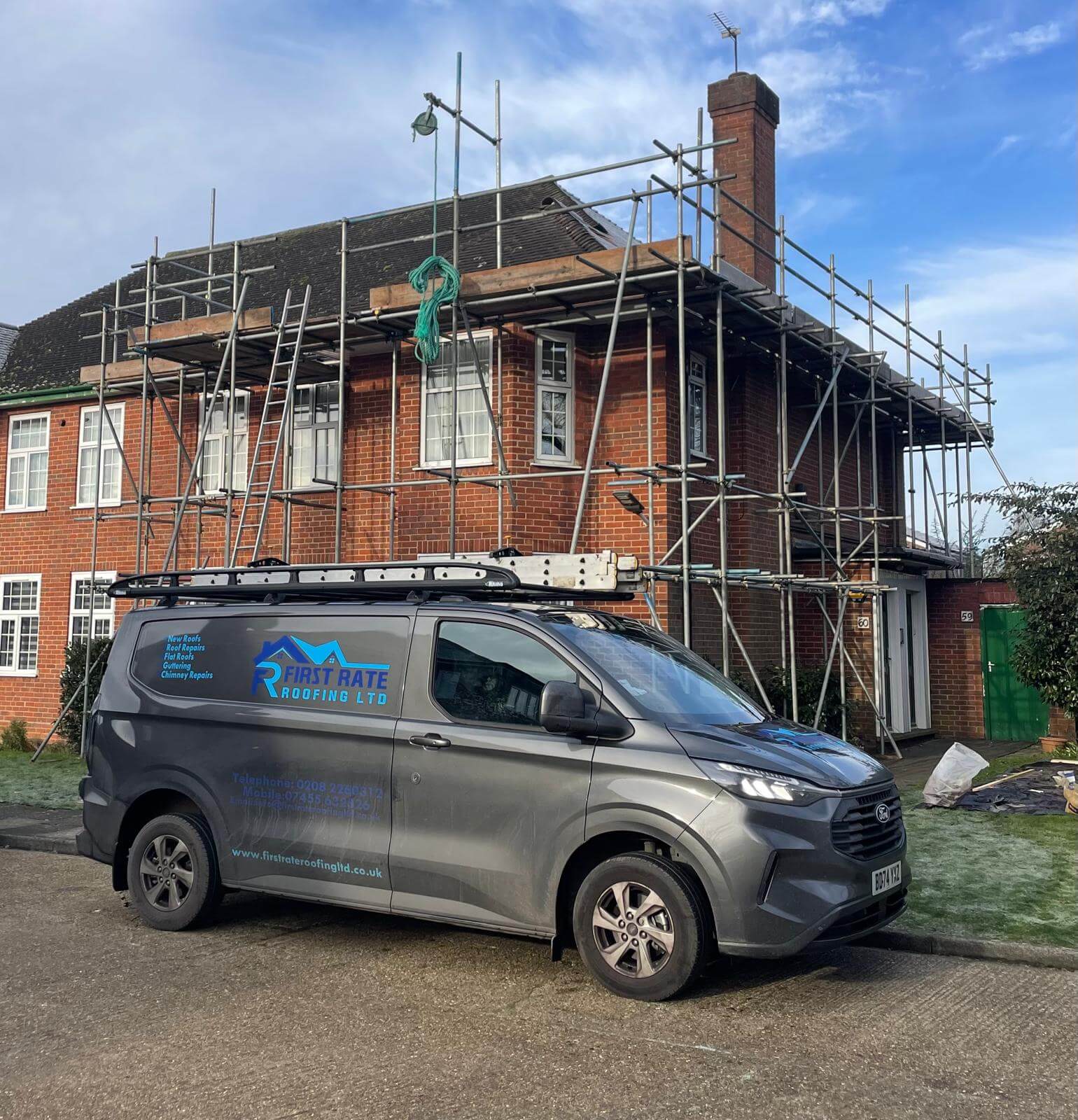
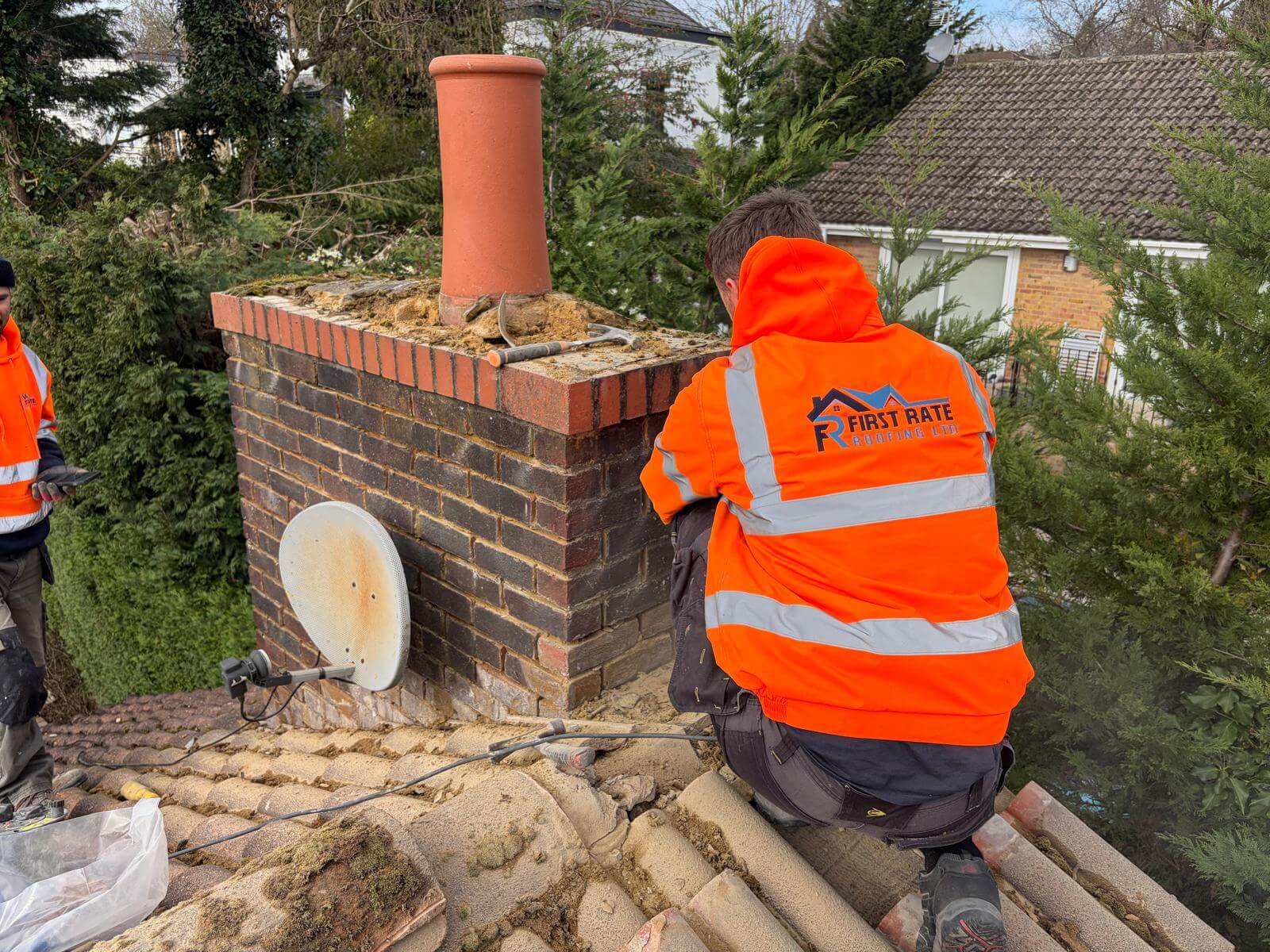
Hydraulic Lime Mortar Repointing: Raking out failed mortar joints to a depth of 25mm and hand-pointing with breathable hydraulic lime matched to original Victorian red or yellow stock brickwork.
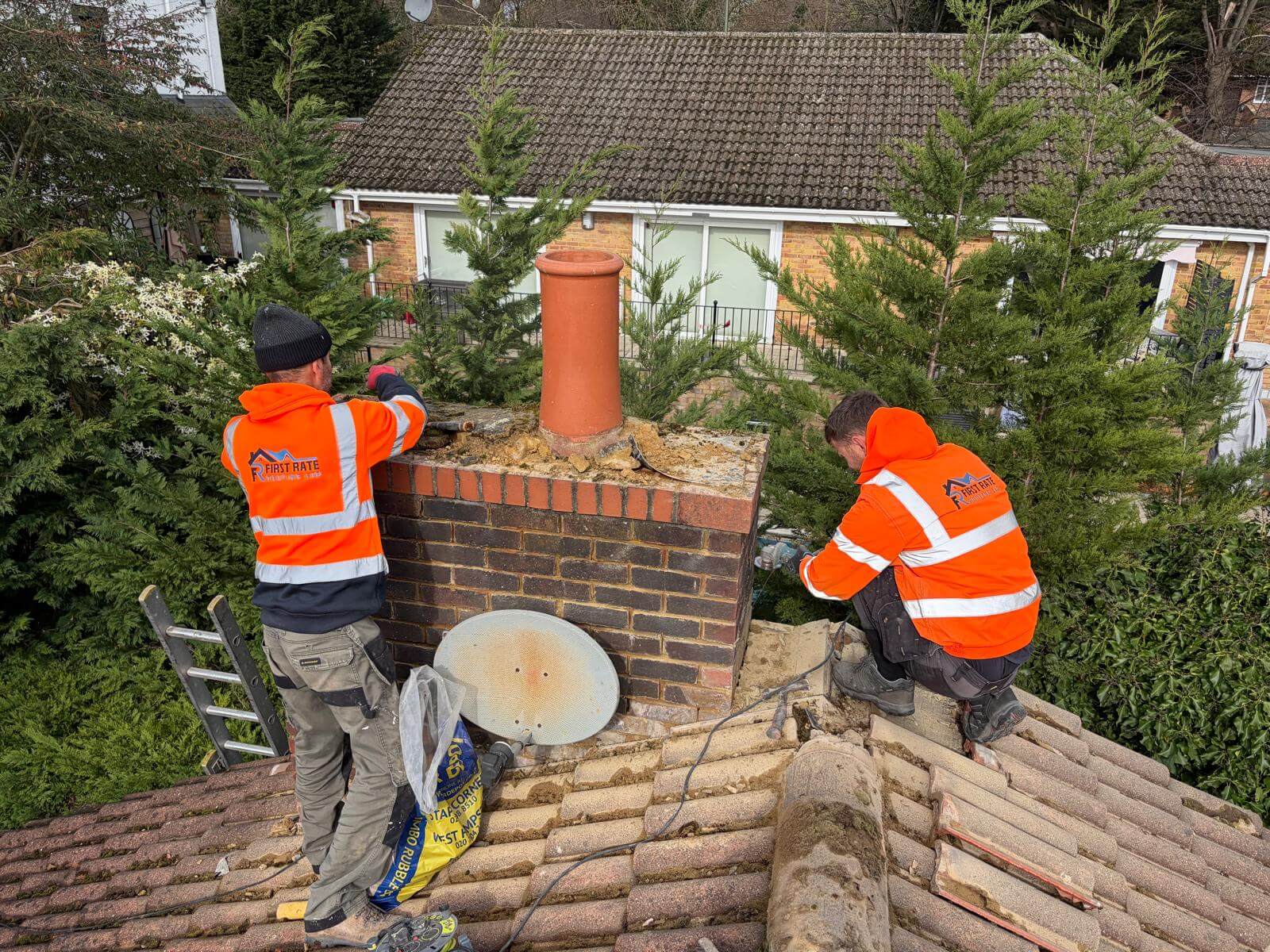
Flaunching Crown Reconstruction: Removing shattered concrete caps and pouring a thick, sloped, waterproof mortar crown around chimney pots to shed rainwater outward.
Code 4 & Code 5 Lead Flashing Repairs: Precision hand-bossed lead aprons, step flashings, soakers, and rear back gutters installed to British Standards (BS EN 12588).
Terracotta Pot Replacement & Re-Bedding: Supplying period-matched clay pots, re-bedding loose units securely in hydraulic lime, and fitting bird-proof cowls.
Ventilated Redundant Flue Capping: Installing terracotta pepperpot caps or C-Cap cowls over disused flues to prevent internal condensation build-up.
Partial & Full Stack Rebuilds: Safely dismantling leaning, hazardous, or severely spalled chimney stacks down to sound masonry and rebuilding with matching facing bricks and wall ties.
Hammersmith & Fulham Heritage Controls, Party Wall Protocols & Safety
LBHF Conservation Area Oversight (Peterborough Estate, Parsons Green, Moore Park)
Large areas of SW6 fall within designated conservation areas managed by the London Borough of Hammersmith & Fulham. Undertaking unapproved alterations or using non-traditional materials on visible roofline stacks can trigger enforcement action. We formulate period-correct lime mortars, source reclaimed Victorian facing bricks, and dress genuine milled lead soakers to satisfy local conservation appraisals.
Party Wall Act Requirements for Shared Terraced Stacks
On terraced streets throughout Sands End and Parsons Green, chimney stacks sit directly along shared party wall boundaries. Carrying out structural brick rebuilds, deep joint raking, or lead replacement on a shared stack impacts both households. We provide detailed photographic schedules of condition and structural work summaries to help homeowners navigate Party Wall Act notifications smoothly with their neighbors.
Engineered Scaffolding over Narrow Mews & Basements
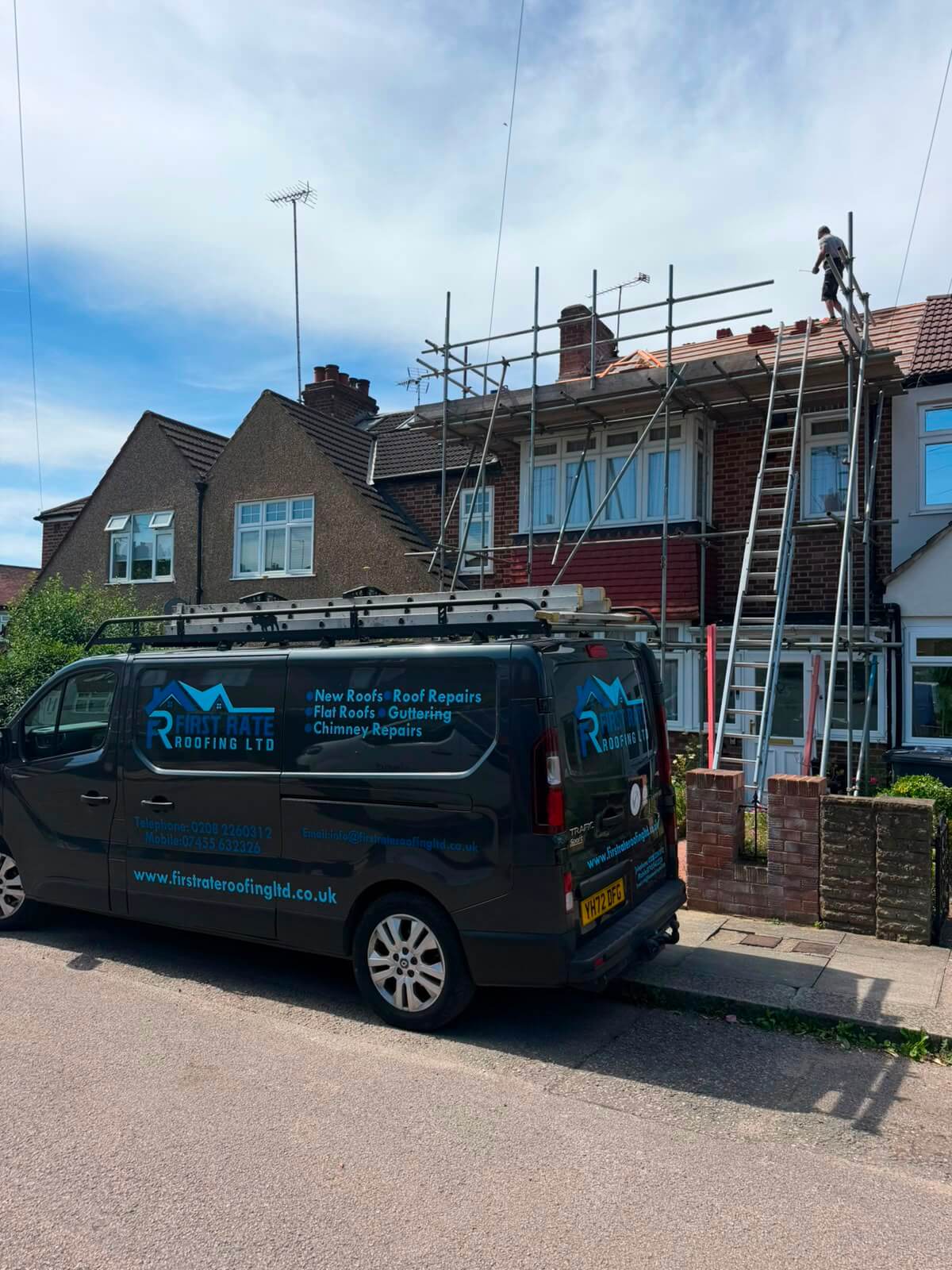
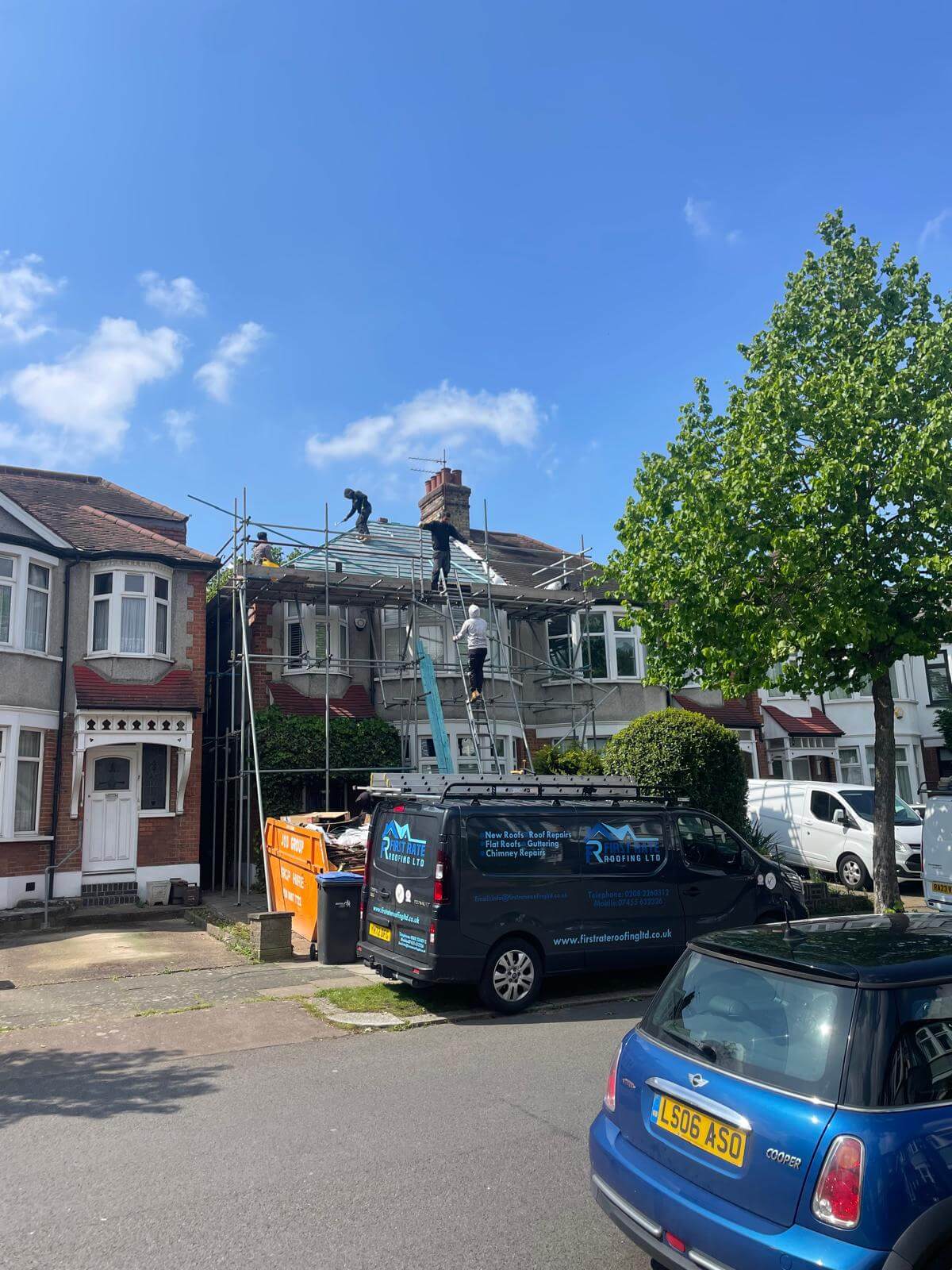
Accessing tall multi-pot stacks on three-story Victorian houses across Fulham often requires navigating narrow access roads, rear lightwells, or lower glass conservatory roofs. We erect fully anchored, tied-in scaffold towers equipped with double guardrails, toe-boards, and heavy-duty debris netting to protect your home and neighboring properties.
Chimney Repair FAQ's
Do I need planning permission for chimney repairs in the Peterborough Estate Conservation Area?
Like-for-like repairs using matching traditional materials (such as hydraulic lime mortar, red facing bricks, and period clay pots) generally fall under Permitted Development and do not require formal planning permission. However, using authentic materials is mandatory in conservation zones across SW6. We advise on local planning guidelines during our free survey.
Why is damp appearing near my upstairs bedroom chimney breast in Sands End?
Damp patches on internal chimney breasts are typically caused by cracked top flaunching mortar, perished lead step flashing where the stack meets the roof, or internal condensation from an unvented disused flue.
How do you fix a leaning chimney stack on a Victorian terrace near Parsons Green?
If the lean is minor and caused by uneven mortar weathering on the windward side, we can stabilize and repoint the stack. If the structural mortar has completely disintegrated, we carefully take down the brickwork to roof level and rebuild it using matching London stock bricks and reinforced wall ties.
Why is lime mortar better than standard cement for period homes in SW6?
Lime mortar is flexible and breathable, allowing trapped moisture to evaporate out through the mortar joints. Rigid cement traps water inside soft period bricks, causing them to crack, split, and spall when water freezes during winter.
Are your physical chimney inspections in Fulham completely free?
Yes. We visit your property in SW6, climb up on ladders to inspect the stack, lead flashings, and mortar condition, and provide an itemized written quote with zero call-out fees.
Any Questions?
Ask Us
Related Roofing Services in Fulham
To ensure complete exterior protection across every property we inspect, we interlink our specialized trades under our primary regional directory for South West London Roofers.


Protect Your Fulham Property with Third-Generation Masonry Specialists
Whether you need traditional lime mortar repointing on a Lion House in the Peterborough Estate or emergency lead flashing repairs near Bishops Park, First Rate Roofing Ltd delivers guaranteed, period-accurate craftsmanship.